Method
Assess, programme, review — then do it again
The studio method is a loop, not a slogan. A sixty-minute movement screen, a four-week block, a review of the positions and the load log, then another block. We opened in 2026 with this loop as the whole offer.
The screen
What the movement screen actually includes
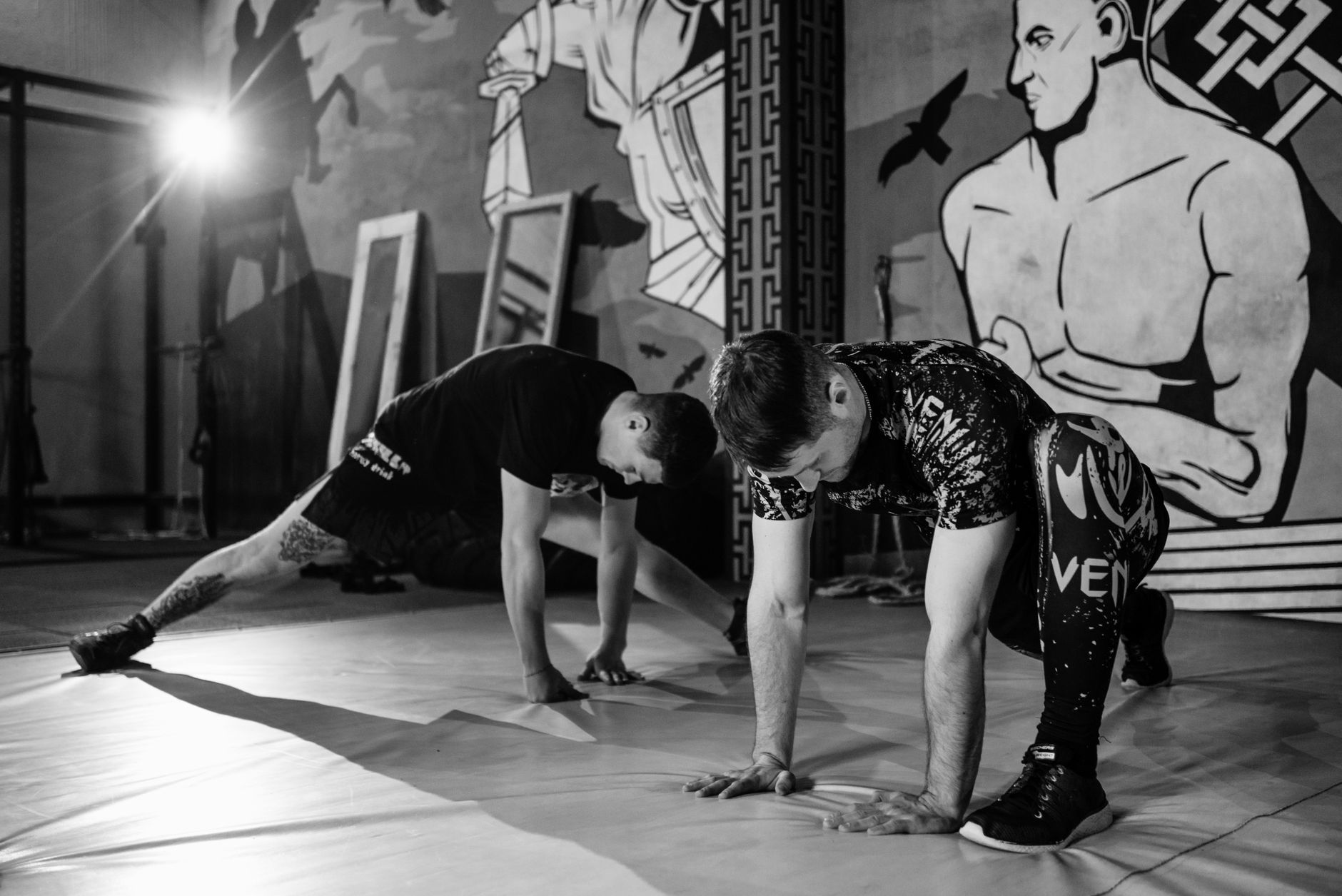
The hour is sixty minutes on the floor. We look at ankle, hip and shoulder ranges, a squat and a hinge, then a single-leg pattern so we can see whether one side is doing the work of two. Breathing is part of the screen because a person who cannot exhale in a position will not own that position under a bar. You fill a short questionnaire on recent training load, sleep and past injuries. None of this is a diagnosis. If something hurts in a way that does not belong in a training room, we stop and ask for a clinician.
You will lift light. The numbers we write down are ranges, how a pattern changes under a pause or a tempo, and which regressions let you train this week. You leave with a spoken outline and a written note. The S$60 screen fee is credited if you buy a package within fourteen days. People who already train are screened too: a history of “I squat twice a week” does not tell us whether the squat is a squat.
The sheet
How we programme a block
Basic patterns come first: squat, hinge, press, pull, and a gait or carry. Accessories exist to support those patterns, not to decorate the week. Volume rises before intensity. Four-week blocks give us enough time to see whether a change is real, and a planned deload so the fifth week is not an accident. We would rather you repeat a lift you can own than rotate through twelve variations because the internet is bored.
Session count is honest. Three sessions is the usual beginner week. Four is possible if recovery and the diary allow it. Two is a valid week when work in the CBD will not give you three. Conditioning density is a separate decision from strength load. In a humid month we cut density first. When a physiotherapist has named a constraint, that constraint is written at the top of the sheet. We do not add extra novelty to make the constraint feel like a special programme.
Climate
Load in heat and humidity
Singapore does not offer a dry season that makes conditioning free. The studio is cooled, but you still arrive from a wet street and you still leave into one. We treat humidity as a programming variable. Interval density comes down before strength volume does. Outdoor finishers are rare and they are not a personality test. If a corporate session is on a podium in the sun, we will change the format on the scoping call rather than discover the problem at 12:15.
Hydration is ordinary water. We do not sell a bottle plan. People who train at 06:30 and people who train at 19:45 get different warm-ups because one walked in from a cold office and the other walked in from the evening heat. That is the whole climate policy: notice the room you arrived from, then write the hour accordingly.
Clinicians
How we work with physiotherapists and doctors
We train. We do not diagnose. If you arrive with pain that has not been seen, we will ask you to see a doctor or a physiotherapist before we load the pattern that hurts. If you arrive with a discharge note, we read it, we copy the named exercises onto the warm-up, and we keep our loading beside that note rather than instead of it. We will not argue with a clinician in the room. We will not take a scan from you and interpret it.
When a clinician wants to speak with us, they can write to [email protected]. We will share the training sheet you have already seen, not a secret file. Pregnancy is trained only with a doctor’s clearance and with a modified programme; we do not run a separate “prenatal brand”, we run the same studio with different constraints. Adolescents from sixteen may train with a parent’s written consent. Under sixteen is not a service we offer.
Review
How we measure progress
At the end of a block we repeat the parts of the screen that were limited. We read the load log. We ask about sleep and how the week felt. Optional progress photographs stay between you and the coach and never appear on this website. We do not publish named results. The review is a decision: add volume, add a session, hold the line, or change the pattern. Figures you see on this site — three sessions, eight people, sixty minutes — are how we plan, not a promised outcome.
If you want a number, the honest numbers are: did you attend the sessions we wrote, did the limited range move, did the primary lift look more repeatable, and did the week still fit a Singapore diary. Those four beat a screenshot of a personal record that cost you the next ten days.
If it stalls
What we do when a plan is not working
A plan can fail in ordinary ways: missed sessions, new pain, sleep that will not settle, a work stretch that ate Thursday. We do not add more conditioning to “make up” a missed week. We rewrite. Sometimes that means two sessions instead of three. Sometimes it means the barbell waits and the dumbbell returns. Sometimes it means we pause training until a clinician has seen you. The four-week review is the usual moment, but we will not wait four weeks if a session is clearly the wrong session.
If the format is wrong — 1:1 when a group would have been enough, or a group when the pattern still needs eyes — we say so. Changing format is not a failure of character. It is the method doing what the screen asked for.
Start with the screen
Sixty minutes at Great World. We reply to an enquiry within one working day and offer two or three times. Bring indoor shoes and any clinician note you already have.